Free streaming websites disguise fragmented MP4 segments inside fake .woff2 font files to deter scraping. By inspecting DevTools network payloads for moof/mdat boxes and fetching the initial init fragment, you can automate sequential segment downloads and remux them into a standard MP4 via FFmpeg.
A friend recently asked me to download a movie that was still in theaters. It wasn’t available on torrents or on any paid streaming service like Netflix or Prime, it was only accessible on a free streaming platform, such as FMovies.
I wanted to download it mainly because free streaming platforms are notorious for:
- Enormous and intrusive ads
- Annoying popups
- Poor user experience (UX)
So I thought: why not try to get the video directly?
That’s when things got interesting. At first glance, the video segments weren’t standard video files—they were being served as .woff / .woff2 files (which are web fonts, not video format).
What I Discovered Under the Hood
- Running
fileon a segment: It showed justdata, nothing obvious. - Hex-dumping the segment (using
xxdor similar): It revealed MP4 boxes (moof/mdat) inside, which are classic markers for fragmented MP4 video. - Finding the init fragment: The initialization fragment (
init) was also disguised as a.wofffile. - Segment numbering: The segments were sequentially numbered:
seg-001,seg-002,seg-003...
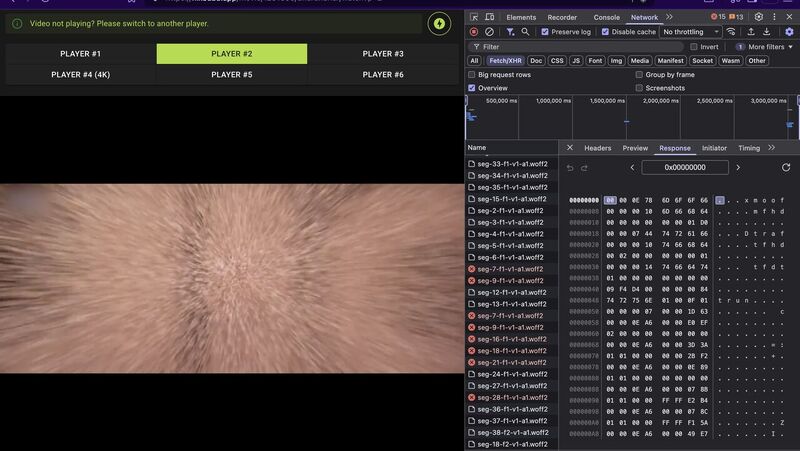
Essentially, the platform was obfuscating and disguising the audio/video stream inside a binary container with font extensions to trick casual inspection. Clever from a delivery standpoint, but entirely reversible.
How I Solved It
Once I understood the structure, I:
- Wrote a script to download all segments sequentially.
- Added retry logic for intermittent network errors.
- Concatenated all segments together starting with the
initfragment. - Used FFmpeg to remux everything into a single, clean, playable MP4 file.
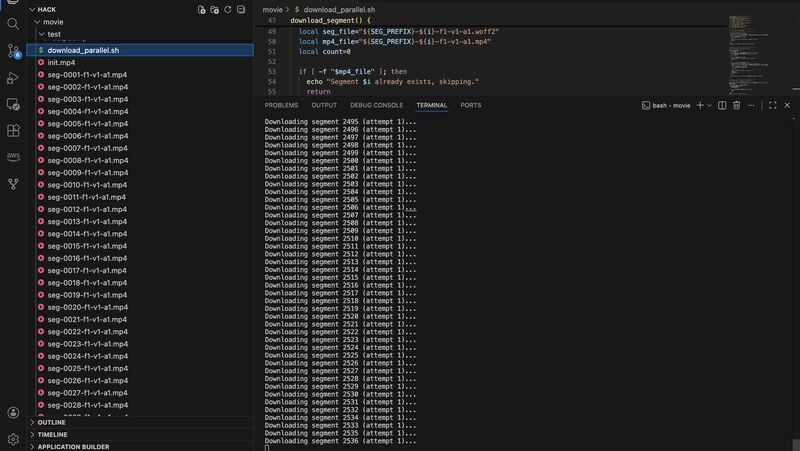
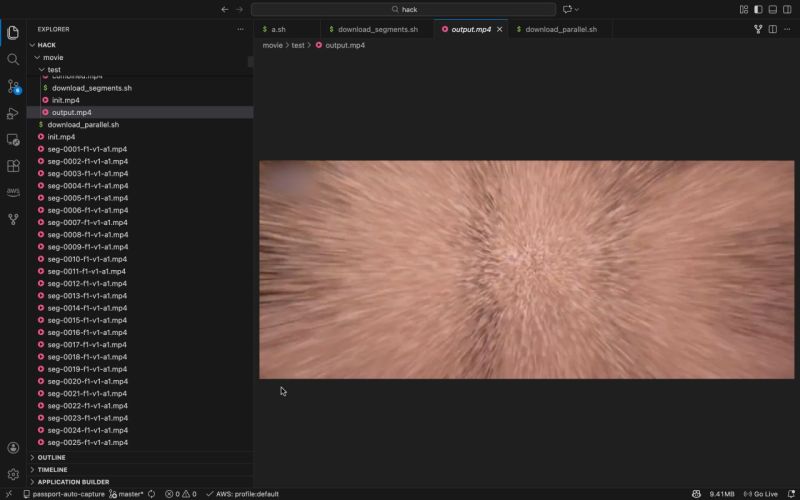
The result? A clean, playable video without ads or interruptions, and a fascinating look behind the scenes of streaming tech.
💡 Insights
- Curiosity and low-level inspection (
file,xxd) can reveal hidden structures. - Free streaming platforms sometimes disguise data to prevent easy scraping or access.
- Automation and scripting can solve repetitive, technical challenges efficiently.
Sometimes, understanding how things actually work under the hood is more rewarding than the end product itself.